
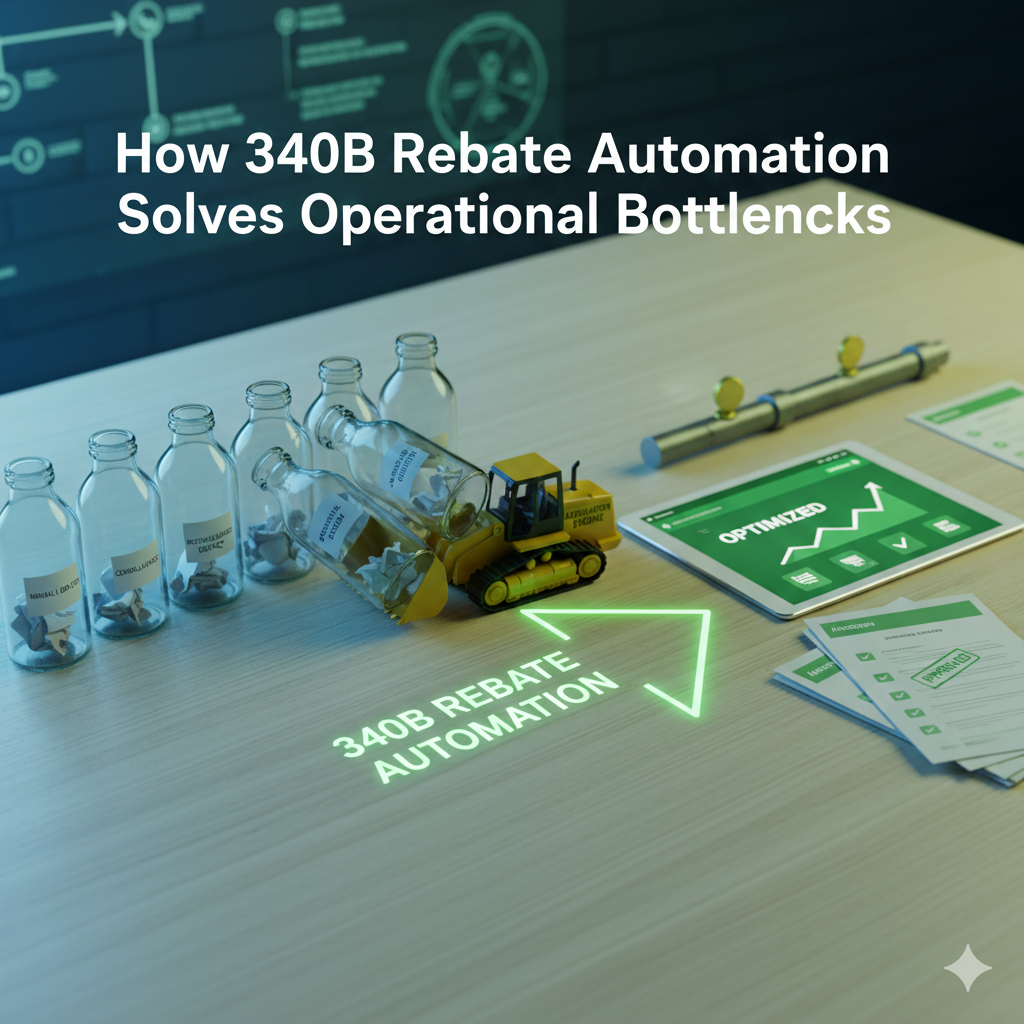
Healthcare finance directors constantly face a difficult choice between speed and accuracy. The manual cleanup of claims data is often the biggest bottleneck in the revenue cycle, consuming valuable staff hours that could be spent on higher-value tasks. This reliance on human intervention creates a high risk for manual rebate processing errors, which eventually lead to denied claims and revenue leakage. By shifting to 340B rebate automation, organizations can stop treating these losses as the cost of doing business. Automation transforms the workflow from a reactive cleanup process into a proactive strategy that secures revenue before it is lost.
1. The Hidden Cost of Manual Workflows
- The Time Trap: Explain how finance teams spend days or weeks scrutinizing spreadsheets to fix data mismatches. This manual effort represents lost time that teams never get back.
- The Error Rate: Discuss how fatigue and complex data sets lead to manual rebate processing errors. Even a small percentage of error can result in significant financial loss over time.
- The Opportunity Cost: Highlight what the team cannot do because they are stuck in the weeds of data entry.
2. How Automated Claim Reconciliation Works
- Instant Validation: Describe the technical process where software scans thousands of lines of data in seconds.
- The Mechanism: Use the keyword automated claim reconciliation here. Explain that the system automatically matches pharmacy dispenses with purchasing data to ensure everything aligns perfectly.
- Exception Handling: Detail how healthcare rebate automation identifies the specific anomalies that need human attention, allowing staff to focus only on the problems rather than reviewing valid claims.
3. Turning Compliance into Revenue Recovery
- Audit Readiness: Explain that automation provides a digital audit trail, which makes compliance much easier to prove during an audit.
- Recovering Funds: Position the software as one of the essential rebate recovery solutions. It captures opportunities that manual eyes often miss.
- Scalability: Mention that as the health system grows, automated systems scale easily without the need to hire more administrative staff.
4. Conclusion
- Summary: Reiterate that 340B rebate automation is not just about saving time but about protecting the bottom line.
- Next Steps: Encourage the reader to assess their current leakage rates.
Closing Statement: “Stop leaving money on the table. Contact us today to see how our automation tools can secure your revenue.”
Ready to bring clarity to your 340B program?
Whether you’re preparing for ESP/Beacon requirements, validating data quality, or reducing compliance risk, we help you move forward with confidence—without forcing you into a new platform.